


 русский
 中文简体
中文简体 Español
Industry News
How Does an Office Stationery Factory Create Notebooks for Different Work Needs
A notebook often looks simple initially, but in practice it is closely linked to how people record ideas, manage tasks, and organize work in everyday environments. Inside an Office Stationery Factory, notebook production is not just about assembling paper and covers, but about shaping how the product behaves once it is actually used.
Different users approach notebooks in different ways. Some focus on writing comfort, some care about structure, and others pay attention to how the notebook holds up after repeated use. Because of these differences, notebook design usually follows more than one direction instead of a single fixed pattern.
What Makes an Office Stationery Factory Capable of Turning Simple Notebooks Into Daily Work Tools
A notebook becomes useful in daily work when it supports repeated writing without feeling awkward or unstable. In an Office Stationery Factory, this depends on how several parts come together during production.
- The paper needs to feel steady when writing across different pen types
- The binding has to keep pages in place even after frequent flipping
- The layout should match how information is usually recorded
- The cover should hold its shape during carrying or storage
- The finishing touches influence how the notebook feels in hand
When these parts are aligned, a basic notebook turns into something that fits naturally into office routines rather than just being a stack of pages.
Which Notebook Materials Are Commonly Chosen by Office Stationery Factories for Long Term Use
Material choice is one of the early decisions in notebook production because it affects both writing feel and how long the product can be used. Different paper surfaces respond differently to pens, and this changes how smooth or controlled the writing feels.
Cover materials are often selected based on how the notebook will be handled in real situations. If it is carried frequently, the surface needs to handle bending and pressure without losing shape too quickly. Binding materials also matter since they decide whether the notebook stays tight or begins to loosen after repeated use.
| Part | Typical Material Direction | Practical Effect |
|---|---|---|
| Inner pages | Writing paper with balanced texture | Supports stable writing behavior |
| Cover | Flexible or structured surface material | Helps protect inner pages during use |
| Binding | Coil, stitched, or adhesive method | Keeps pages held together during use |
Why Paper Selection in an Office Stationery Factory Directly Shapes Writing Comfort and Ink Performance
Paper plays a direct role in how writing feels because it is the surface that every pen interacts with. Small differences in paper behavior can change the entire writing experience.
Some paper absorbs ink quickly, which helps reduce smudging, while other types hold ink longer on the surface. This can change how text appears after writing. The texture also matters, since a smoother surface allows the pen to move more freely, while a slightly textured surface can give more control.
Another point is how much writing shows through on the other side of the page. If ink visibility is too strong, it can interfere with reading or writing on the reverse side. Because of these factors, paper selection in an Office Stationery Factory is usually matched carefully with the intended writing purpose.
How Office Stationery Factories Develop Notebook Designs That Match Different Writing Habits
People do not all write in the same way, so notebook layouts are designed to support different habits rather than forcing a single style.
Some users prefer structured writing space where notes stay organized in straight lines. Others rely on more open pages that allow sketches, diagrams, or mixed writing styles. There are also cases where users switch between structured and flexible writing depending on the task.
| Layout Type | Common Usage Pattern | Writing Behavior Support |
|---|---|---|
| Ruled pages | Linear note writing | Helps keep writing aligned |
| Grid pages | Planning or diagrams | Supports structured spacing |
| Dot pages | Mixed use | Allows flexible arrangement |
| Blank pages | Free writing | No fixed writing direction |
These layout choices help notebooks fit into different working styles instead of limiting how information is recorded.
How Office Stationery Factories Build Custom Notebook Solutions for Brand Identity Projects
A notebook tied to a brand usually starts with a few practical choices rather than a big concept.
- How it will be used in daily work
- What kind of writing style it needs to support
- Whether the cover should feel formal or relaxed
- How much room the layout should leave for notes
- How closely the design should follow the brand image
These details may sound small, but they shape the way the notebook feels in real use. A clean cover, a simple page pattern, or a neat logo position can make the notebook feel more connected to its purpose without making it look busy.
In many office settings, people notice the notebook only when it feels awkward to use. That is why design choices usually need to stay practical first. When the structure and the appearance move in the same direction, the result tends to feel more natural on the desk, in a meeting, or in a bag.
What Happens Inside an Office Stationery Factory From Notebook Design to Finished Production
Notebook production usually moves through a steady sequence. It begins with the page layout and the material plan, then moves into printing, cutting, binding, and final checking. Each step depends on the one before it, so the early choices often decide how smooth the rest of the process will be.
| Production Stage | Main Focus | What It Influences |
|---|---|---|
| Layout planning | Page structure and use purpose | Writing flow and page function |
| Material preparation | Paper and cover selection | Feel, handling, and durability |
| Printing and cutting | Page content and size control | Accuracy and consistency |
| Binding and assembly | Joining pages and covers | Stability in daily use |
| Final checking | Surface, edges, and structure | Finished look and usability |
Even a simple notebook passes through several hands and several stages before it is finished. A small shift in paper choice or binding method can change how the product feels later, so the process is usually more detailed than it initially appears.
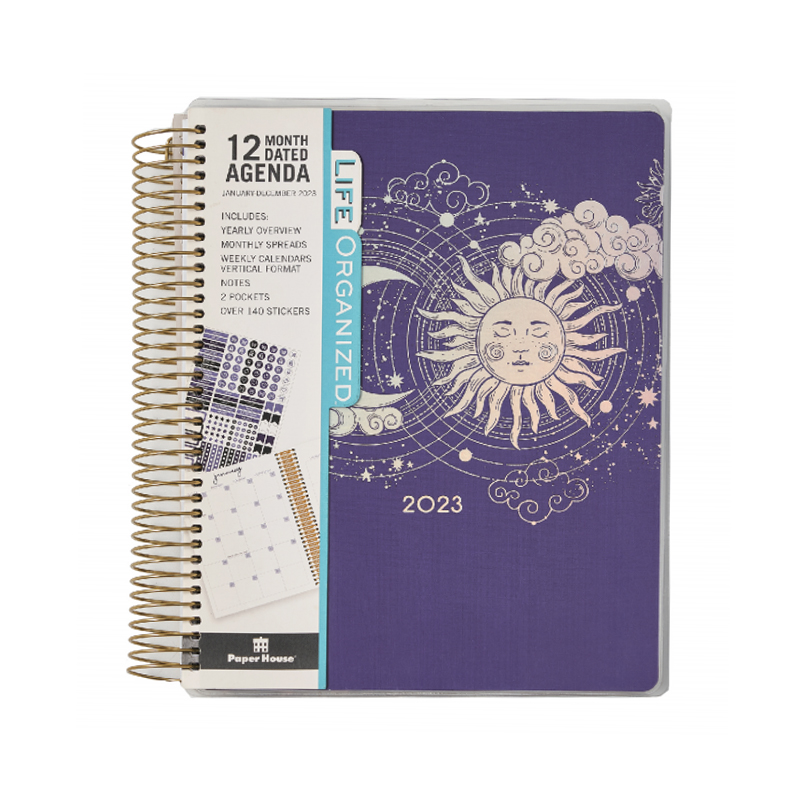
How an Office Stationery Factory Builds Custom Notebook Solutions for Brand Identity Projects
When a notebook is made for a brand-related project, the goal is usually to keep it useful while giving it a clear visual character. That balance matters. If the design leans too far toward appearance, the notebook can feel impractical. If it stays too plain, it may not reflect the brand well.
The cover is often the initial point where this balance is set. A restrained design can work well for office use, while a more tailored layout may suit a team that wants the notebook to carry a specific style. Page format also plays a part, since the inside layout can make the notebook feel either more structured or more open.
There is often a gap between how a notebook looks in a design draft and how it works after printing and binding. That is why the later production stage usually needs a careful check. Small adjustments at that point can make the final notebook easier to use and closer to the original idea.
How Office Stationery Factories Adapt Notebook Styles for Different Markets and Office Environments
Notebook preferences are not the same everywhere. Some offices rely on neat pages that help keep notes in order. Others need a notebook that leaves room for quick sketches, task lists, or mixed use. Even the same workplace may need more than one style depending on who is using it.
The adjustment often begins with the layout and the cover. A compact notebook may suit people who move around a lot, while a more open format may fit creative work or planning sessions. In many cases, the changes are not dramatic. They are small enough to make the notebook feel appropriate without drawing attention to themselves.
| Office Environment | Notebook Style Tendency | Practical Reason |
|---|---|---|
| Meeting focused office | Structured pages | Helps keep notes organized |
| Creative work setting | Open or mixed layouts | Leaves room for sketches and ideas |
| Frequent travel use | Compact and sturdy format | Easier to carry and protect |
| Internal planning use | Simple and functional design | Keeps attention on tasks |
A notebook that fits its setting usually feels easier to use from the start. That kind of fit comes from paying attention to the setting itself, not just the look of the product.
For a closer look at how these ideas come together in production, Zhejiang Huangyan Huifeng Stationery Manufacturing Co., Ltd. is one name that appears in this space.
Hot Products
Work With Us
We would love to hear more about your project
Product Links
Contact
- ADD:No.6, Gongren Road, Yuanqiao Town, Huangyan District, Taizhou City, Zhejiang Province, China
- Phone: +86-576-84879806
- Mob: +86-18057690111
- Email: [email protected]
Mobile Site
Copyright © Zhejiang Huangyan Huifeng Stationery Manufacturing Co., Ltd.All Rights Reserved.

Office Stationery Factory