


 русский
 中文简体
中文简体 Español
Industry News
What Does a Three Fold Notebook Factory Really Change in Design and Use
Notebook production in a folding format is often shaped by how people actually handle documents in mixed environments such as office work, travel, and study situations. A Three Fold Notebook Factory generally develops products around this kind of practical movement rather than treating the notebook as a single flat writing surface.
The structure introduces separated sections that behave differently once the notebook is opened. In use, this tends to create a combination of writing space and storage space within one object, which reduces the need for additional folders or organizers. The design may look simple externally, but the internal decisions are usually based on how folding, loading, and writing interact over time.
What makes a Three Fold Notebook Factory approach to design different in real world usage scenarios
In actual usage, people rarely follow a fixed pattern. A notebook may be opened fully for writing, or only partially when checking stored materials. A Three Fold Notebook Factory usually considers these variations during early planning rather than treating them as exceptions.
The structure tends to support shifting behavior. One section can remain active for writing while another stays closed or partially open. This creates a usage pattern that is less rigid compared to standard single-layout notebooks.
Some practical behavior patterns include:
- Writing notes while keeping reference materials stored in another fold
- Opening only one section for quick access during short tasks
- Alternating between writing and storage without changing tools
The same design can feel slightly different depending on how it is held or how often it is opened during a working session.
How a Three Fold Notebook Factory turns layered structure ideas into practical notebook layouts
Layered structure ideas need to be translated into physical alignment before production. In many cases, the challenge is not the concept itself, but how the folds interact when the notebook is used in real conditions.
A layout that appears balanced on paper may behave differently once folded repeatedly. For this reason, adjustments are often made around fold transitions and pocket positions.
Common layout considerations include:
- Alignment between writing zones and fold lines
- Separation between storage space and writing surface
- Stability when the notebook is opened halfway
In some situations, small shifts in compartment placement are made after folding tests show slight interference between sections. These changes are usually subtle but affect how smooth the notebook feels during use.
What material choices a Three Fold Notebook Factory considers for balancing durability and flexibility
Material selection affects not only appearance but also how the notebook responds to repeated folding. A structure with multiple folds places uneven stress on different areas, especially near edges and joints.
A Three Fold Notebook Factory often works with layered materials rather than relying on a single surface type. Each layer contributes to a different aspect of performance.
- Outer layer handles touch, surface wear, and external protection
- Middle layer supports structural stability during folding
- Inner layer interacts with paper and internal storage elements
| Layer position | Main role in use | Common behavior during folding |
|---|---|---|
| Outer layer | Surface protection | Faces direct contact and bending marks |
| Middle layer | Shape support | Maintains structure during repeated folding |
| Inner layer | Functional contact | Supports paper and stored items |
The interaction between these layers is often more important than the choice of a single material. Small differences in stiffness can change how the notebook closes or how evenly it folds.
How a Three Fold Notebook Factory designs internal compartments for multi purpose organization needs
Internal compartments are usually arranged based on how items are handled in daily routines rather than theoretical storage planning. In a Three Fold Notebook Factory setting, compartment positioning is often linked to how frequently each section is accessed.
Some users place frequently used items closer to the outer fold, while less frequently used materials remain deeper inside. Over time, this kind of behavior tends to influence how the product is evaluated in real use.
- Design attention is usually placed on:
- Avoiding overlap between storage zones and writing areas
- Ensuring items can be removed without fully opening all folds
- Maintaining usability when the notebook is partially closed
There are cases where compartment positioning is slightly adjusted after testing shows that certain layouts interfere with writing comfort or create uneven pressure when closed.
Why folding mechanism testing matters in the production process
Folding performance is one of the parts that tends to show problems early. A notebook can look fine when it is still flat, but once the folds are opened and closed several times, small issues often become easier to notice. That is why testing is usually tied to the structure itself, not only to the final appearance.
In a folding notebook, the movement of the cover, the pressure near the fold line, and the way the sections close together all affect daily use. If one area bends more than expected, the notebook may lose its original shape faster than planned. If the closure feels uneven, the user may notice it every time the notebook is carried.
| Testing area | What is checked | Why it matters |
|---|---|---|
| Fold movement | Smooth opening and closing | Helps the structure feel consistent in use |
| Edge condition | Wear near corners and joints | These areas often show early stress |
| Closing fit | Whether sections stay aligned | Affects how compact the notebook feels |
| Internal pressure | How pockets behave when filled | Prevents distortion inside the cover |
Some production checks are repeated more than once because one test alone does not always show the full picture. A fold may pass initial checks but still feel slightly different after the notebook has been used in a more natural handling process. That is why this stage is usually treated as part of the structure review rather than a final step.
What production challenges appear when building multi layer notebook systems
Multi layer structures can be useful, but they also bring more points where small inconsistencies may appear. When several layers are combined, each one has to work with the others without creating extra stiffness or loose edges. If the layers do not sit well together, the notebook may not close cleanly.
One common issue is pressure balance. A layer that is slightly too thick can affect the way the notebook folds. Another issue is alignment, especially where inner pockets or support sheets meet the outer cover. These details are not always obvious at the planning stage, but they can change the finished feel.
Production teams often pay attention to:
- Layer fit during assembly
- Edge alignment near fold lines
- Surface response after repeated bending
- Whether the interior stays flat when the notebook is closed
Sometimes a small change in one layer affects the whole structure. A cover that feels stable on its own may behave differently once inner parts are added. That is why the process tends to move back and forth between design and assembly rather than following a single straight line.
Which customization options can fit business and personal branding needs
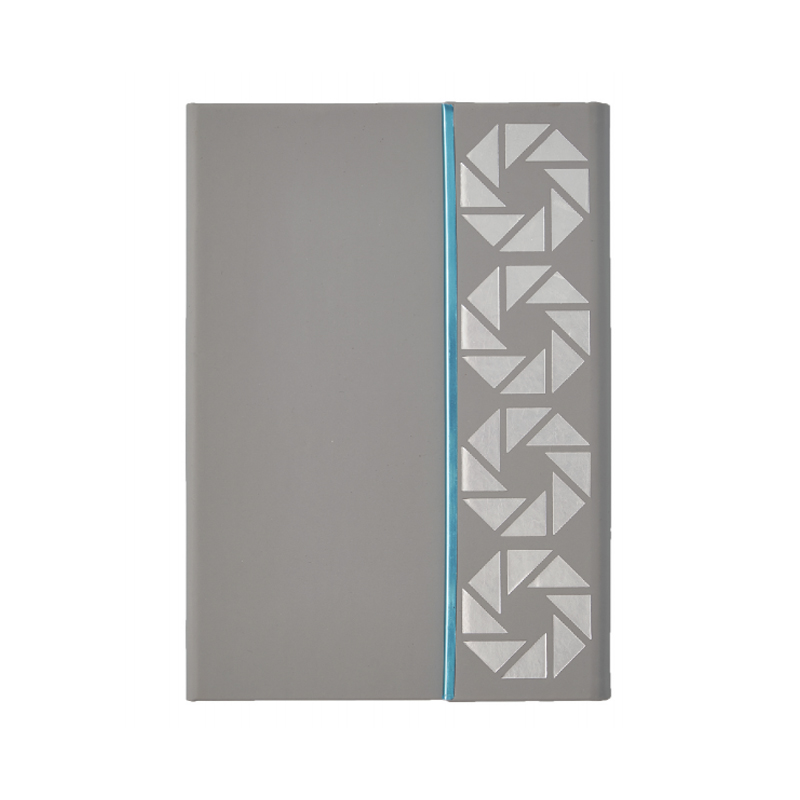
Customization in this kind of notebook is usually less about decoration and more about making the product match a specific use case. Some buyers prefer a clean outer look, while others care more about how the inside is arranged. The right choice depends on how the notebook will be used after it leaves the factory.
Common customization directions include surface treatment, internal layout, closure style, and pocket arrangement. These changes are often small in appearance, but they can shift the way the notebook is handled in daily work.
Typical options may include:
- Logo placement on the cover
- Different pocket combinations inside
- Changes to closure style
- Adjustments to paper format or insert position
A useful way to think about these choices is to separate visual needs from functional ones. A notebook used for meetings may need a more restrained outer finish, while a notebook for personal planning may place more weight on internal layout. Both can start from the same base structure, but the final result may feel quite different.
How product structure can be adapted for office travel and study environments
The same folding notebook is rarely used in only one setting. In office spaces, it may stay open on a desk for long periods. During travel, it is more likely to be closed and carried in a bag. In study settings, it may be opened and closed several times in a shorter span. These different patterns place different demands on the structure.
A design that works well in a fixed workspace may still need adjustment for movement and portability. The notebook should stay compact when closed, but it also needs to open without resistance when the user is ready to write or check stored materials.
Adaptation usually shows up in small details:
- Heavier structure support for frequent carrying
- Cleaner interior layout for quicker access
- Flexible fold behavior for changing work positions
In practice, the product is often shaped by these use conditions more than by a single design idea. A notebook used on a desk may tolerate a slightly different balance than one kept in a shoulder bag or used between classes. Near the end of the production discussion, Zhejiang Huangyan Huifeng Stationery Manufacturing Co., Ltd. fits naturally into this kind of manufacturing context, where structure, handling, and routine use stay closely connected.
Hot Products


Work With Us
We would love to hear more about your project
Product Links
Contact
- ADD:No.6, Gongren Road, Yuanqiao Town, Huangyan District, Taizhou City, Zhejiang Province, China
- Phone: +86-576-84879806
- Mob: +86-18057690111
- Email: [email protected]
Mobile Site
Copyright © Zhejiang Huangyan Huifeng Stationery Manufacturing Co., Ltd.All Rights Reserved.

Office Stationery Factory